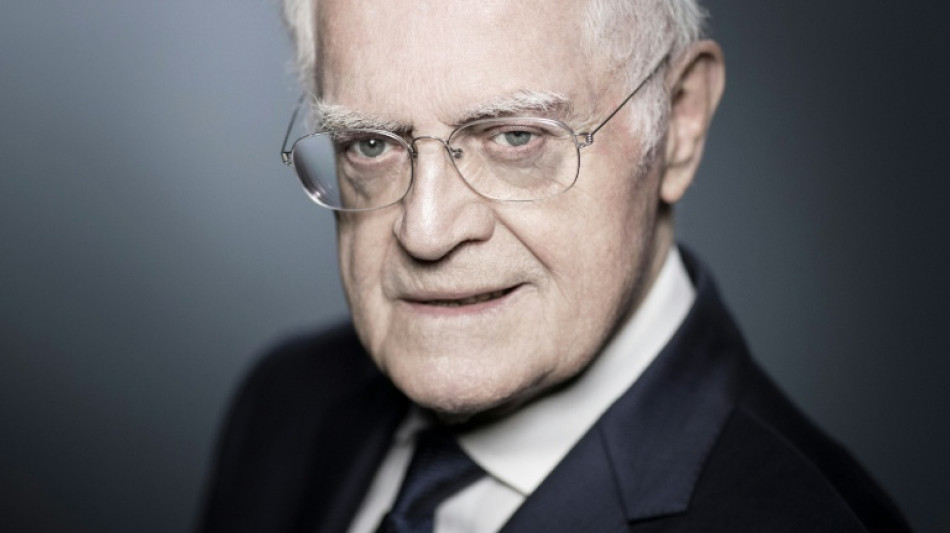
France ex-PM Lionel Jospin dies aged 88 / Photo: JOEL SAGET - AFP/File

Former French prime minister Lionel Jospin, a Socialist who introduced the 35-hour work week and civil partnerships for gay couples, has died aged 88, his family said on Monday.
Jospin -- who was head of government from 1997 to 2002 before being overtaken by the far right in presidential polls -- died on Sunday, they told AFP.
He had said he had a "serious operation" and had returned home to rest in January, without providing details.
To supporters, Jospin was honest and strait-laced. To his critics, he was a colourless technocrat.
He paid a high price for his lack of pizzazz when he ran for president in 2002.
A former economics professor, Jospin cast himself as a clean pair of hands compared to his conservative rival, the corruption-tainted but chummy and charismatic Jacques Chirac.
But far-right leader Jean-Marie Le Pen beat him to the second round and Socialist voters ultimately rallied around Chirac in the runoff vote.
Jospin's defeat by Le Pen -- the father of current far-right presidential hopeful Marine Le Pen -- prompted him to announce his retirement from politics.
- 'From a simple background' -
While the bespectacled intellectual with a crown of white curls was credited with being an effective prime minister, his lack of rapport with the public always made him an unlikely father of the nation.
Born on July 12, 1937, in the Paris suburb of Meudon to a middle-class Protestant family, Jospin joined the Scouts as a teenager and was a keen basketball player.
"I come from a simple background. I have absolutely no desire to belong to a sort of 'upper class'," he said in later years.
As a politics student, he opposed France's war with independence fighters in Algeria and flirted with Trotskyism.
But like generations of business and political leaders before and after, he studied at the elite National School of Administration (ENA).
Jospin began his career at the foreign ministry and also worked as an academic before joining Francois Mitterrand to try to reform the Socialist Party.
After Mitterrand's landmark election as France's first Socialist president in 1981, his trusted adviser took over the party leadership.
Jospin was elected to parliament twice, representing the working-class 18th district of Paris and later the southwestern Haute-Garonne region.
In 1988, he became education minister in the government of reformist prime minister Michel Rocard, setting up seven new universities within four years.
But as accusations of corruption and dirty tricks against Mitterrand began to mount, his relations with the president became more distant.
Bidding to succeed his former mentor in 1995, Jospin shocked many Socialists by claiming a "right of inventory" over Mitterrand's legacy -- a right to reassess a record that loyalists deemed sacrosanct.
That year, he narrowly lost the presidential election to Chirac.
Two years later, though, Jospin won a revenge of sorts when the cocky Chirac called an early general election, expecting his right-wing RPR party -- forerunner of Nicolas Sarkozy's Republicans -- to win easily.
The Socialists stole the day, ushering in five years of uneasy "cohabitation" between Chirac as president and Jospin at the helm of government.
Jospin, who has two children with his first wife, also remarried that year, to feminist philosopher Sylviane Agacinski.
- 'Courage' -
President Emmanuel Macron praised Jospin on X for his "rigour, his courage and his ideal of progress".
As prime minister, he charted a pragmatic economic course and sought to stamp out corruption, appointing only scandal-free ministers to his team.
He brought down unemployment and revived growth, but it was his social reforms that defined his tenure.
Apart from chopping four hours off the working week, he introduced civil unions -- laying the ground for a gay marriage bill that was adopted over a decade later, despite mass protests.
But Jospin tripped up in his 2002 presidential rematch against Chirac, making a number of gaffes, including a swipe at his opponent's age that was seen as below the belt.
In the end he trailed in third place behind Chirac and Le Pen, in one of the biggest political upsets in post-war France.
"I assume full responsibility for this defeat," an ashen-faced Jospin announced, bowing out of politics to howls of dismay from supporters.
He later blamed his demise on the failure of other left-wing factions to support his bid, splitting the vote.
P.Michel--MJ