Healthy Alternatives to Cheat Meals: 28 Nutritious Ways to Satisfy Cravings

Eating healthily does not require eliminating favorite indulgences like chocolate, pizza, or burgers. By substituting high-calorie ingredients with nutrient-dense alternatives, individuals can satisfy cravings while maintaining a balanced diet. Experts suggest focusing on whole grains, lean proteins, and healthy fats to create satisfying meals that support long-term wellness goals.
The concept of a "cheat meal" often implies a temporary break from dietary restrictions, but nutritionists and health experts increasingly suggest that satisfying food cravings does not require abandoning nutritional principles. Rather than viewing healthy eating as a process of elimination, the focus is shifting toward modification—finding ways to enjoy familiar flavors while incorporating fiber, protein, vitamins, and healthy fats.
This approach challenges the binary notion that food must be either "healthy" or an "indulgence." Instead, it proposes that many traditional comfort foods can be reimagined using ingredients that offer substantial nutritional benefits. The goal is not to make every meal a calculated health intervention, but to integrate nutritious choices into a lifestyle that allows for occasional treats without derailing overall dietary patterns.
For those with a sweet tooth, several alternatives provide the texture and flavor of desserts while delivering essential nutrients. Frozen chocolate-covered bananas offer a simple yet effective solution. By dipping banana slices in melted dark chocolate and freezing them, one creates a dessert with a creamy center and crunchy coating. Bananas contribute potassium and fiber, while dark chocolate provides intense cocoa flavor. Similarly, Greek yogurt topped with fresh berries and a drizzle of honey mimics the experience of a rich dessert. This combination delivers protein, calcium, and fruit-based nutrients. Choosing plain yogurt helps minimize added sugars.
Another popular option is homemade chocolate avocado mousse. Blending ripe avocado with unsweetened cocoa powder, a small amount of milk, and a chosen sweetener results in a smooth, chocolatey treat. Avocados are rich in fiber and predominantly unsaturated fats, making this a nutrient-dense alternative to cream-based mousses. For a quicker snack, dates stuffed with peanut butter offer a satisfying bite. The natural sweetness of the date pairs with the creamy nut butter, providing fiber from the fruit and protein and unsaturated fats from the nuts.
Breakfast foods can also be adapted to serve as dessert-like treats. Mashed bananas, eggs, and oats can be combined to create naturally sweet pancakes. Serving these with fresh berries or plain yogurt instead of heavy syrup reduces sugar intake while maintaining satiety. Additionally, frozen yogurt bark offers a refreshing snack. By spreading plain Greek yogurt on a tray, adding chopped strawberries, blueberries, nuts, or dark chocolate, and freezing until firm, one can break the mixture into pieces for a cold, crunchy treat.
Baked fruits provide another avenue for satisfying sweet cravings. Sliced apples sprinkled with cinnamon and baked until soft offer a comforting alternative to traditional baked desserts. Their natural sweetness reduces the need for added sugars, and adding yogurt enhances creaminess. For chocolate lovers, pairing a few squares of dark chocolate with almonds offers rich cocoa flavor and crunch. Almonds provide fiber, protein, and unsaturated fats, though checking labels for added sugar is recommended.
Savory cravings can also be addressed with nutritious alternatives that mimic the texture and satisfaction of processed snacks. Popcorn, when prepared with minimal oil, butter, or salt, serves as a satisfying alternative to heavily seasoned crisps. As a whole grain, it provides dietary fiber. Sweet potato wedges, seasoned with paprika and black pepper and baked until golden, offer a colorful substitute for deep-fried fries. Roasted chickpeas, tossed with olive oil, garlic powder, paprika, and cumin, provide plant-based protein and fiber, making them a useful alternative to packaged savory snacks.
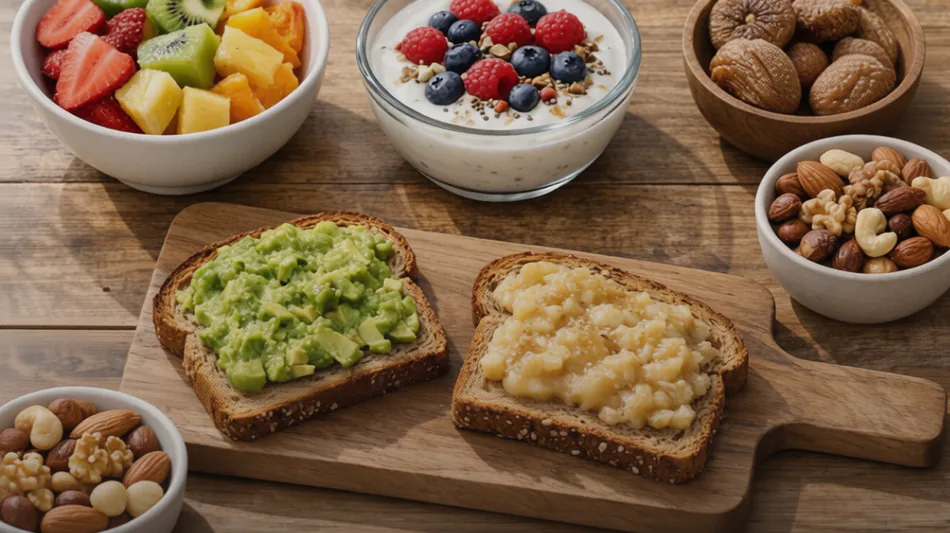
Avocado toast remains a staple in healthy eating, but its versatility extends beyond breakfast. Spreading mashed avocado over wholegrain toast and finishing with lemon juice, black pepper, and chili flakes provides fiber, healthy fats, and a satisfying crunch. Similarly, pairing hummus with raw vegetables such as cucumber, carrots, celery, and bell peppers offers plant-based protein and fiber from the chickpeas, while the vegetables add crunch and variety.
Kale chips, made by tossing washed and dried leaves with olive oil and seasoning before baking until crisp, provide a light, crunchy snack. However, their nutritional value depends heavily on preparation methods and portion sizes. Apple slices with peanut butter offer another simple snack, combining fruit fiber with the protein and fats of nut butter to increase satiety.
Edamame, steamed young soybeans sprinkled with salt, is a simple savory snack that provides plant-based protein and fiber. Zucchini chips, made by thinly slicing zucchini, seasoning with herbs and black pepper, and baking until crisp, offer a vegetable-based alternative to traditional potato chips. Homemade salsa, made with fresh tomatoes, onions, coriander, lime, and chili, provides a flavorful dip when served with baked wholegrain tortilla chips.
Complex meals can also be reimagined. Pizza can be enjoyed by using a wholegrain or thin base, adding tomato sauce, vegetables like mushrooms, peppers, and spinach, and a moderate amount of cheese. This allows for the incorporation of more vegetables and whole grains. Grilled chicken breast in a wholegrain bun with lettuce, tomato, and yogurt-based sauce offers a satisfying alternative to heavily fried burgers. Baked potato wedges, seasoned with rosemary, paprika, and black pepper, retain fiber when the skin is left on.
Cauliflower wings, made by breaking cauliflower into florets, coating them lightly with seasoning, and baking until tender and golden, provide a spicy snack option when tossed with hot sauce and served with yogurt-based dip. Wholegrain tortilla wraps filled with grilled chicken, lettuce, cucumber, tomatoes, and light yogurt dressing offer a convenient alternative to takeaway wraps. Bean tacos, using lean minced beef or seasoned black beans with wholegrain or corn tortillas, can be topped with lettuce, tomatoes, salsa, and avocado for a colorful meal.
Falafel, prepared using chickpeas, parsley, garlic, cumin, and coriander, can be baked rather than deep-fried. Serving it with wholegrain pita, salad, and yogurt or tahini dressing creates a balanced meal. Greek yogurt dip, mixed with garlic, lemon juice, dill, and other herbs, serves as a creamy accompaniment to fresh vegetables or wholegrain crackers.
Smoothies offer another way to incorporate fruit and nutrients. Blending banana, berries, plain yogurt, and milk creates a refreshing drink. Using whole fruit rather than juice helps retain fiber, though portion control is important due to the potential for substantial natural sugar content. Frozen fruit pops, made by blending fresh mango, strawberries, or watermelon with water or yogurt and freezing in molds, provide colorful treats without relying on heavily sweetened commercial versions.
Experts emphasize that eating well is not about following a perfect menu or refusing every tempting treat. A balanced eating pattern is built through consistent choices over time. Simple habits can make a significant difference: choosing whole grains for additional fiber, including fruits and vegetables in meals and snacks, adding protein sources such as eggs, yogurt, beans, fish, and nuts, and using unsaturated fats like olive oil and avocado in sensible amounts.
Comparing food labels to identify added sugar and excess sodium is also crucial. Paying attention to portions, even when eating foods made with nutritious ingredients, helps maintain balance. Ultimately, no food needs to be labeled as forbidden. Chocolate, pizza, and other favorites can have a place in a balanced diet. The best approach involves enjoying food, experimenting with ingredients, and finding nutritious alternatives that individuals genuinely look forward to eating.
S.Bruno--MJ