Korea Joins Elite $1 Trillion Export Club Amid Geopolitical Uncertainty

South Korea has joined the United States, China, and Germany as only the fourth country to export more than $1 trillion in goods in a single calendar year, marking a historic economic achievement. However, experts warn that this financial success must be underpinned by robust diplomatic strategy and security alliances to protect national interests.
South Korea has joined the United States, China, and Germany as only the fourth country in history to export more than $1 trillion worth of goods in a single calendar year. The milestone was reached on November 19, representing a dramatic transformation from an economy that exported just $33 million in 1960.
The achievement marks the culmination of decades of industrial development and labor by generations of Koreans who sought to provide better living conditions for their descendants. Yet, alongside this economic triumph, geopolitical analysts are urging the nation to address vulnerabilities in its security posture and diplomatic leverage.
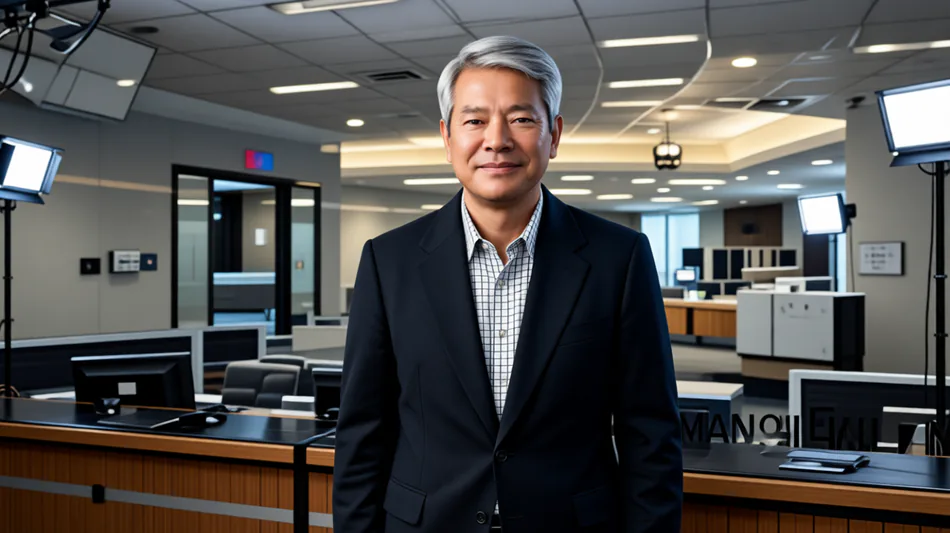
Man-Ki Kim, an adjunct professor at the KAIST Graduate School of Future Strategy and senior adviser at Yoon & Yang, highlighted a photograph from Shenzhen showing Chinese President Xi Jinping seated between US President Donald Trump and Russian President Vladimir Putin. Reports indicated that the Korean Peninsula was discussed during these high-level talks. The image has sparked concern among Koreans regarding the potential for external powers to dictate terms regarding their peninsula without adequate consultation.
This anxiety echoes historical precedents, such as the 1945 Yalta Conference, where Allied leaders discussed placing Korea under international trusteeship without Korean input. Subsequently, American officers and Soviet officials agreed on the 38th parallel as a boundary for accepting Japan’s surrender, dividing the peninsula. The legacy of this division remains potent; millions lost their lives during the Korean War that began in 1950, and the 1953 armistice halted active combat but did not end the state of war.
The ongoing security obligation is visible in South Korea’s military service requirements. Many young men fulfill mandatory duty, a reality recently underscored when all seven members of the global pop group BTS paused their careers to serve. Kim, who served more than three years as an Army officer along the Demilitarized Zone, noted that soldiers on both sides of the border share a common language and view Korea as home.
Diplomatic efforts are underway to manage these tensions. President Lee Jae Myung spoke with Russian President Vladimir Putin the evening before the Shenzhen meeting, marking the first contact between the two leaders in seven years. The dialogue aimed to ease peninsula tensions, particularly as North Korea has sent troops and munitions to support Russia’s war in Ukraine and signed a mutual military assistance pact with Moscow.
Kim argued that if tensions rise, questions remain regarding what restraint President Putin might demand from North Korean leader Kim Jong-un. He emphasized that while China is now South Korea’s largest trading partner—a historical irony given its role in the Korean War—Washington remains the primary treaty ally Seoul would contact in a crisis.
The article suggests that industrial negotiations offer lessons for diplomatic strategy. Leverage is strongest before commitments are made. For instance, when a foreign partner requests a Korean firm to build a shipyard, it is the optimal time to negotiate terms for Korean suppliers competing for future orders. Once construction begins, bargaining power shifts.
This principle applies to potential nuclear talks between Washington and Pyongyang. Kim proposed that Seoul and Washington should agree beforehand on which security proposals affecting South Korea require prior consultation. He posed a hypothetical scenario: if Washington secured limits on North Korean missiles capable of reaching Los Angeles but left those targeting Seoul untouched, a Korean president would need a clear mandate to address the remaining threat.
To strengthen this position, Kim advised President Lee to meet with opposition leaders before any summit to establish a unified national goal. Speaking for Korea in Washington with domestic consensus would provide greater diplomatic weight.
The upcoming US midterms also present opportunities for South Korean diplomats. With Democrats expected to take control of both houses of Congress in January, Korean policymakers should engage lawmakers from both parties. Areas of potential cooperation include helping revive American shipyards and discussing long-term security implications of nuclear-powered submarine collaboration in the Indo-Pacific.
China also has a stake in peninsula peace. Chinese manufacturers relying on Korean suppliers for production stability would suffer significantly from any crisis. Seoul can leverage this shared economic interest to press Beijing to uphold trading rules and ease tensions.
Behind the trillion-dollar export figure lies what Kim calls the "Korean Operating System": generations of Koreans who built ships, manufactured semiconductors, and earned customer trust through reliability. He concluded that no Korean family should pay the price for decisions made about them without their consent. When the future is at stake, he asserted, Korea must speak for itself.
F.Lambert--MJ