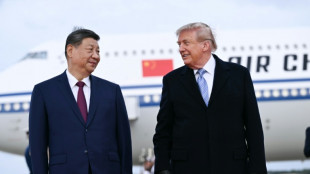
AI-led boom in IPOs raises concerns about a bust / Photo: SPENCER PLATT - GETTY IMAGES NORTH AMERICA/AFP/File

This has been a banner year for stock listings, thanks largely to AI firms, but the massive size of the operations raises questions about whether the markets can continue to absorb them.
In just the first half of 2026, there were $194 billion in stock market listings worldwide -- triple the amount for the same period in 2025 and more than last year as a whole, according to figures from consultancy EY.
The bulk of the money has been raised in the United States, and to a lesser degree in China.
The massive $86-billion listing of SpaceX shares in June accounted for nearly half of the total.
Equity markets haven't seen such activity since central banks eased up on corporate financing as part of efforts to prop up economies whiplashed by the Covid-19 pandemic.
However, "this intense frenzy of demand is really concentrated in a few sectors that are working right now, such as AI and technology, also maybe aerospace and defense, maybe biotech," said Matthew Kennedy, a senior strategist at Renaissance Capital.
Tech firms need to finance hundreds of billions in investments into developing and deploying AI.
Debt markets and private financing are not capable of satisfying their needs.
Among investors "there is a belief that AI responds to a long-term economic need and that now is the time to invest," said Philippe Kubisa at PwC France.
- China and US dominate -
Eight out the top 10 initial public offerings (IPOs) of shares since the beginning of the year have been in the United States, with half on the Nasdaq which caters to tech shares.
The "financial deregulatory measures undertaken by Donald Trump since the start of his mandate" have facilitated the listings, said EY's Cedric Garcia, who advises companies on stock listings.
"We're even seeing a desire to list as much as possible before the midterm elections in November as a victory by Democrats could threaten those measures," he added.
The second half of the year could also see blockbuster listings potentially worth hundreds of billions from the two leading AI startups in the US: OpenAI and Anthropic.
AI is also driving the growth in listings by Chinese firms, as well as the tighter restrictions on capital movements amid continued tensions between Beijing and Washington.
In the current situation "Chinese companies that would have raised funds in the United States are now turning to Hong Kong," said EY's Garcia.
With $48 billion in funds raised since January, Hong Kong's exchange is in line to record its best performance in five years according to PwC.
The $3-billion listing of Victory Giant, a supplier for AI chip giant Nvidia, puts it in fourth place globally for 2026.
Chinese AI startups like Deepseek and Moonshot AI, as well as Baidu's chip subsidiary Kunlunxin and Zhongji Innolight which makes high-speed optical connectors for AI infrastructure, could soon follow.
- Main risk: an AI bubble -
However, some market players fret that all of this momentum could be an AI bubble that is about to burst.
For several months now, stocks linked to the sector have been regularly rattled by such fears.
Moreover, these "gigantic deals can already drain liquidity from the market and may create situations in which there is more supply than demand," weighing on prices, said PwC's Kubisa.
If a financial bubble were to burst "or if prices remained in a sustained downward trend, the flow could dry up," said EY's Garcia.
Already, since mid-July, SpaceX's share price has slipped below its initial listing value.
And outside China and the United States, IPO activity is anemic, especially in tech.
The region encompassing Europe, the Middle East and Africa has so far raised only $16 billion, flat compared with last year.
Nevertheless, Europe is benefiting from a flicker of activity in the defence sector, notably with the stock market debut in Amsterdam of Czech arms giant CSG, at $4.47 billion, the third-largest deal worldwide since January.
E.Fournier--MJ