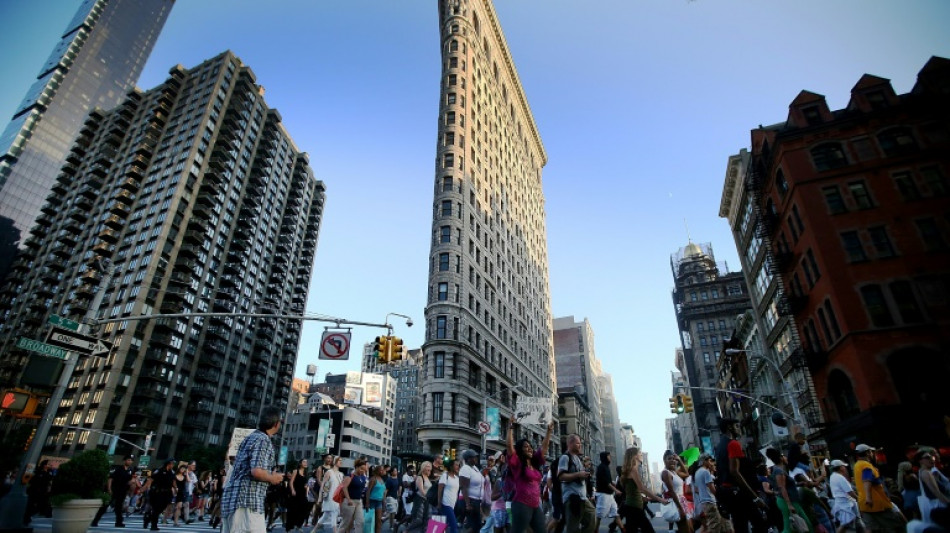
New York's landmark 'Flatiron' sold -- hopefully for real this time / Photo: MARIO TAMA - GETTY IMAGES NORTH AMERICA/AFP/File

New York's iconic Flatiron Building was auctioned off Tuesday for $161 million to a group of investors led by real estate developer Jeffrey Gural, after the previous bidding's winner failed to complete the transaction, organizers said.
The sale of the world-famous skyscraper took place outdoors in lower Manhattan with seven bidders registered and about a hundred people present, Mannion Auctions told AFP.
The property -- on a wedge-shaped lot at the intersections of Fifth Avenue, Broadway and 22nd Street -- went to Gural, 80, one of its five current owners, who was the second highest bidder during the highly contested previous auction.
On March 22, little-known bidder Jacob Garlick, founder of the Abraham Trust equity venture fund, obtained rights to the Flatiron with a pricey offer of $190 million but missed a deadline to pony up 10 percent of the money to lock in purchase.
The 121-year-old property -- one of the first skyscrapers in Manhattan, designed by renowned Chicago architect Daniel Burnham -- has been empty since its last tenant left in 2019. Its five owners could not agree on what to do with the building, and a judge ordered its auction.
After Garlick pulled out of the deal, the building could have automatically gone to Gural, who had offered $189.5 million in March, but he opted for a new auction to be held.
The 22-story triangular edifice completed in 1902 was revolutionary for its time, built on a steel skeleton and clad in limestone and terra cotta with touches of both beaux arts and Renaissance revival architecture.
C.Neri--MJ